Do You Know How Do Robot Vacuums Navigate?
Modern robotic vacuums have evolved significantly from their early predecessors. While initial models relied on random movement patterns that often resulted in redundant cleaning, modern devices now employ sophisticated navigation technologies to optimize cleaning efficiency. Let's explore how these intelligent systems operate.
Mapping Fundamentals
The foundation of efficient robotic cleaning lies in spatial awareness. Through an initial mapping process, devices create digital floor plans that enable systematic cleaning. This process typically involves:
- Initial Exploration: The robot vacuum scans and records room layouts during first-use operation
- Data Storage: Stores floor plans in companion smartphone apps for future reference
- Adaptive Learning: Continuously updates to account for furniture rearrangements or new obstacles
Core Navigation Technologies
Manufacturers employ various mapping methodologies to achieve precise navigation:
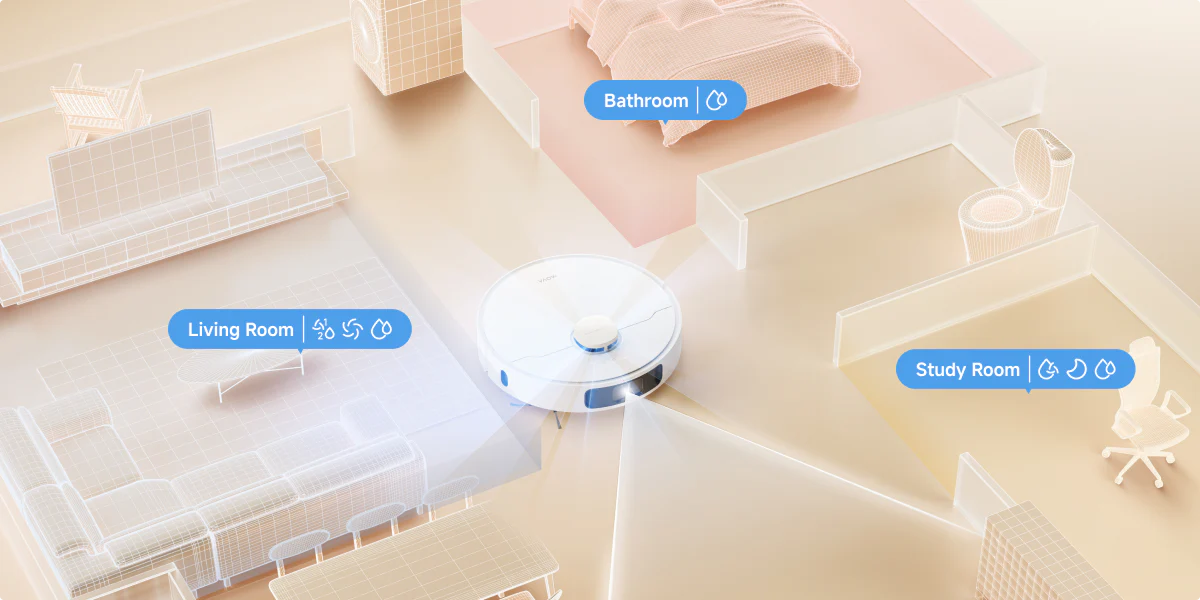 A. Visual Mapping Systems
Utilize digital cameras to identify visual landmarks
Require ambient lighting for optimal performance
Incorporate integrated light sources for low-light conditions
B. LiDAR Technology
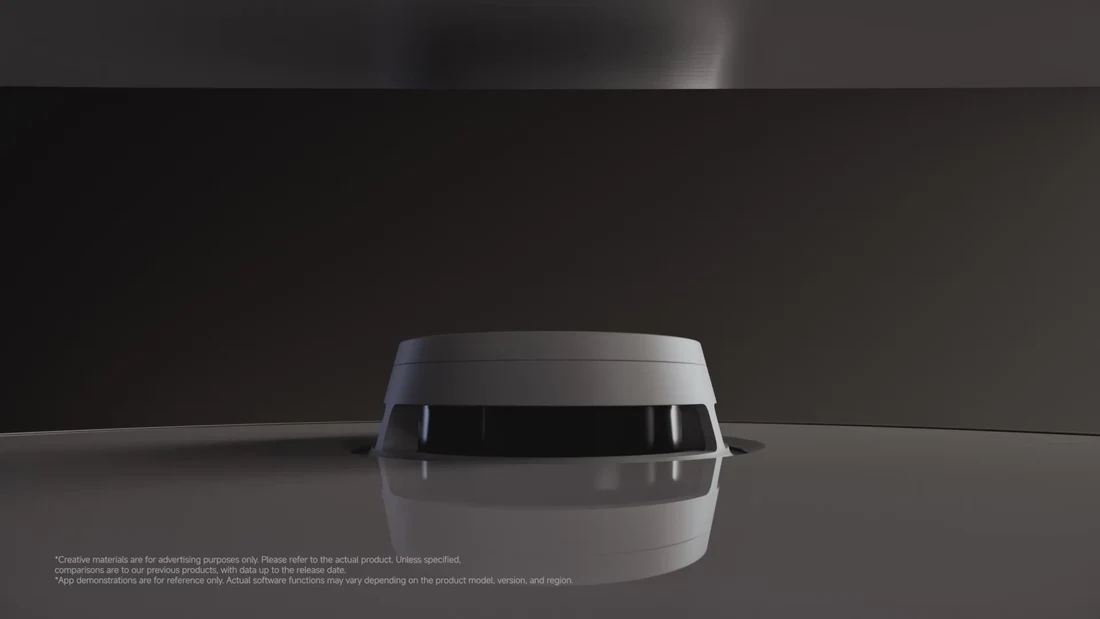
Employ rotating laser sensors for precise spatial measurement
Create detailed 3D maps through laser pulse measurements
Enable methodical straight-line cleaning patterns
C. Inertial Guidance Systems
Rely on gyroscopic sensors and accelerometers
Calculate position through motion tracking
Offer cost-effective solutions with moderate precision
D. Hybrid Solutions
Combine multiple technologies for enhanced accuracy
Integrate with proprietary algorithms for optimal pathfinding
Essential Sensor Arrays
Modern robotic vacuums incorporate multiple sensor types to ensure safe operation:
Cliff Sensors
All vacuum robots have cliff sensors as a safety requirement. These sensors use infrared light that reflects off surfaces. When the receiver detects no reflected signal (indicating a drop), the vacuum alters its path to prevent falls.
Obstacle Sensors
Positioned on bumpers, these sensors detect physical contact with objects. Upon activation, they trigger evasive maneuvers to avoid collisions during cleaning operations.
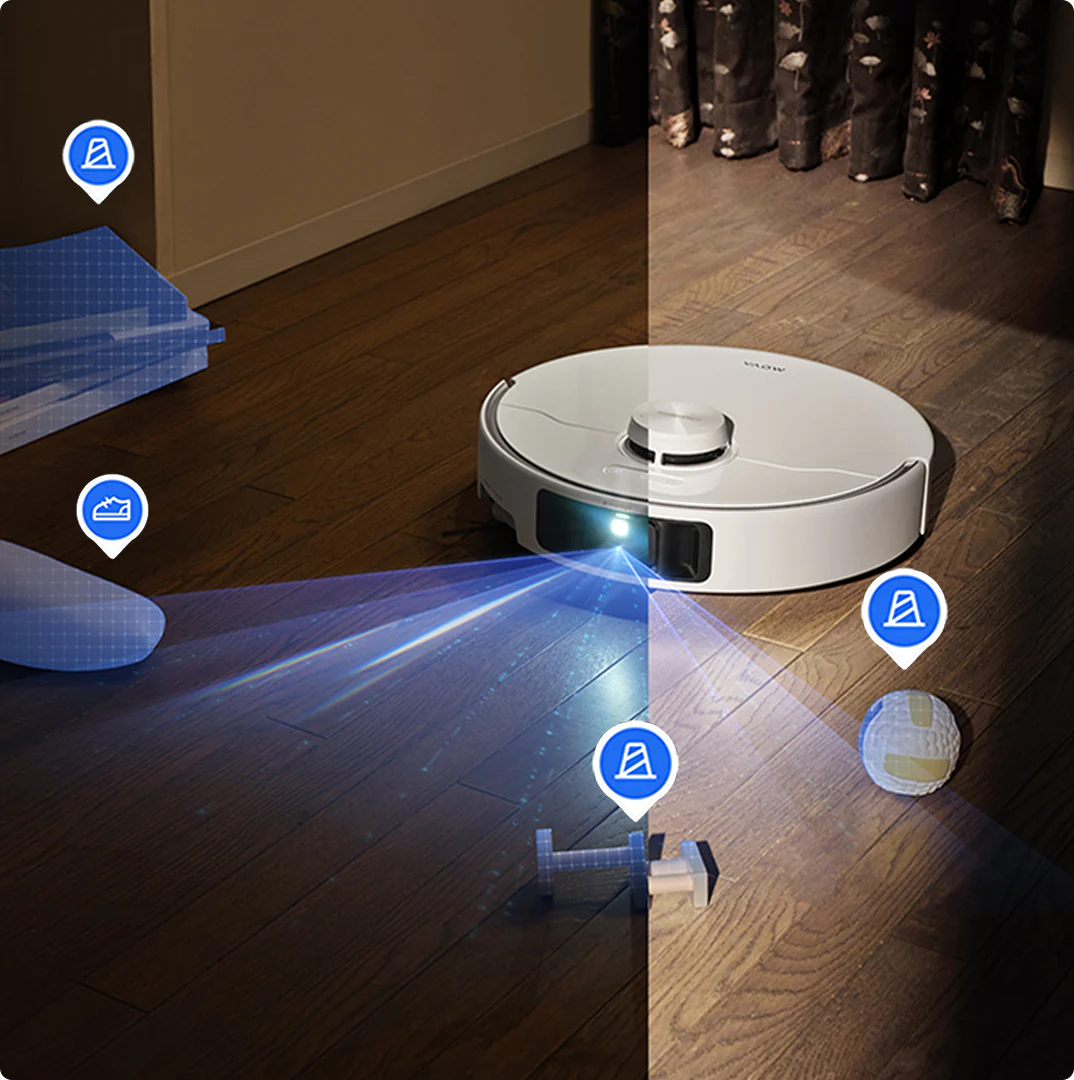 Wall Sensors
Using infrared technology, these sensors detect vertical surfaces and enable precise boundary cleaning without wall collisions.
With cutting-edge navigation and obstacle avoidance systems, our model delivers outstanding cleaning performance, allowing users to experience fully optimized technology-driven solutions.




 9497
9497